Brendan Gould
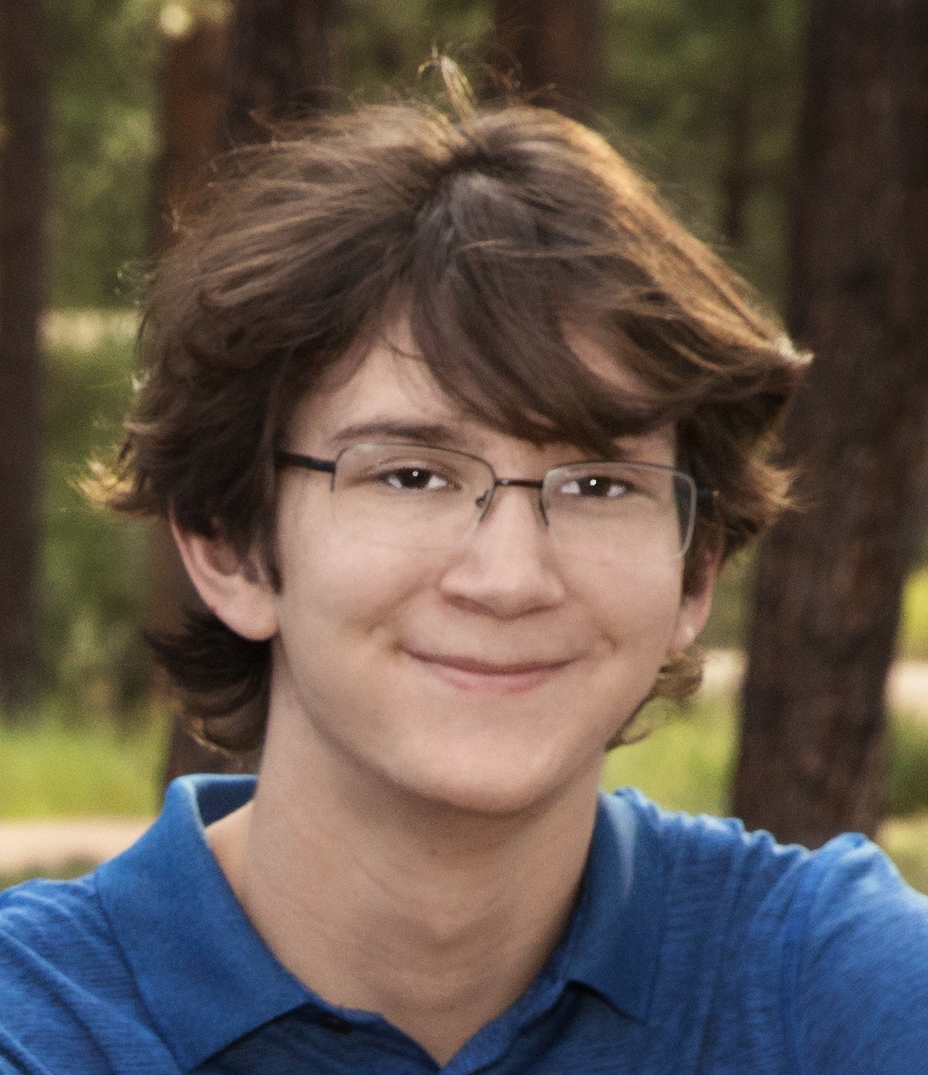
I am a Ph.D. student at the Georgia Institute of Technology, co-advised by Dr. Samuel Coogan and Dr. Kyriakos Vamvoudakis. My research combines control theory and game theory to design behaviors for autonomous systems in socially interactive scenarios. In particular, I am interested in how to appropriately define robustness in response to human or unpredictable decision-makers, beyond the overly-conservative assumption of adversarial behavior.
I have been awarded a NSF Graduate Research Fellowship and the Georgia Tech President’s Fellowship. My undergraduate degrees were completed at the University of Colorado Colorado Springs, where I earned dual B.S. degrees in Computer Science and Mathematics and was supported by the Kane Scholarship.
Email: bgould6 [at] gatech [dot] edu
News
- May 2026: I attended ACC in New Orleans, Louisiana to present our paper
linrax: A JAX Compatible, Simplex Method Linear Program Solver. Our work Quantum Deception: Honey-X Deception using Quantum Games also appeared at the conference. - December 2025: I attended CDC in Rio de Janeiro, Brazil to present our paper Automatic and Scalable Safety Verification using Interval Reachability with Subspace Sampling.
- July 2025: I attended ACC in Denver, Colorado.
- June 2025: I was awarded a NSF Graduate Research Fellowship, after applying as a first-year Ph.D. student in Fall 2024.
- May 2025: I attended ICRA in Atlanta, Georgia.
- August 2024: I started my Ph.D. in Electrical and Computer Engineering at the Georgia Institute of Technology.
- July 2024: I attended ACC in Toronto, Canada to present our paper Information Design Under Uncertainty for Vehicle-to-Vehicle Communication.
- May 2024: I graduated summa cum laude from the University of Colorado Colorado Springs with a B.S. in Computer Science and a B.S. in Mathematics
- December 2023: I attended CDC in Marina Bay Sands, Singapore to present our paper Rationality and Behavior Feedback in a Model of Vehicle-to-Vehicle Communication.
- May 2023: Our journal article Information Design for Vehicle-to-Vehicle Communication was published in Transportation Research Part C: Emerging Technologies.
- June 2022: I attended ACC in Atlanta, Georgia to present our paper On Partial Adoption of Vehicle-to-Vehicle Communication: When Should Cars Warn Each Other of Hazards?